
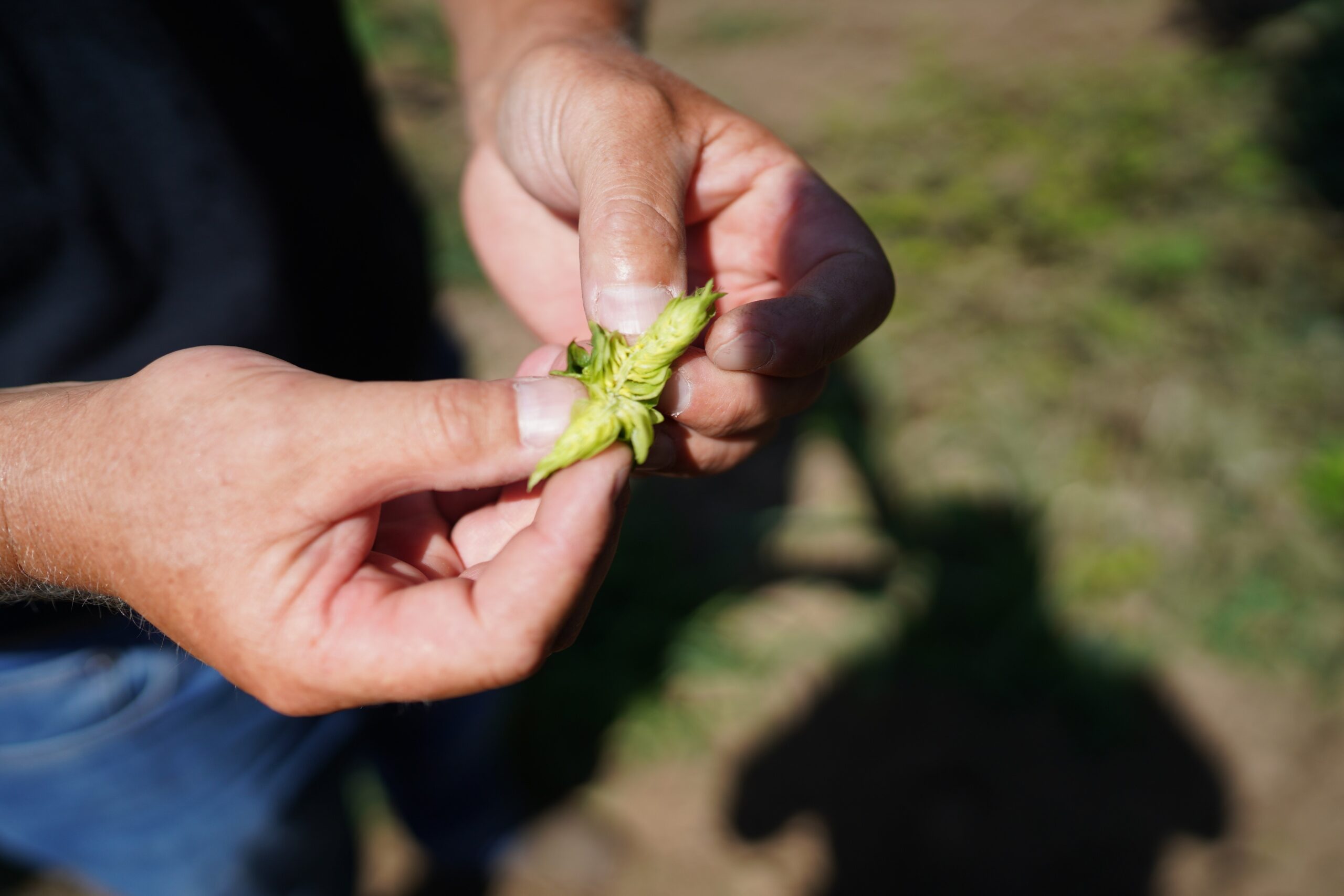
There is a temptation, when talking about hops, to reduce them to a single number. Specifically, alpha acid percentage. The higher, the better, right?
Not necessarily.
At Upstream Brewing Company, the brewers look at hops as one piece of a much larger picture. The variety matters. The balance matters. The character of the individual hop matters.
“We don’t always want high alpha acid, and beta acid is also a key component,” Upstream’s Brewer said. “Each hop varietal brings a different note and a different flavor. You don’t always want tropical aromas.”
This tells us a lot about how the brewer approaches an ingredient that has become almost synonymous with modern craft beer.
Not Every Beer Should Be a Day at the Beach
Tropical hop aromas have become very familiar to loyal beer drinkers. Depending on the variety, hops can suggest citrus, fruit, flowers, herbs, spice or earth, among other characteristics. But variety is the true spice of life, and choosing the right hop for the beer being made goes far beyond the alpha acid content.
Beta acids and the characteristics of the individual varietal also matter. A brewer has to consider what each hop will contribute to the finished beer rather than simply reaching for the most potent option. It is the kind of decision that may happen quietly in the brewhouse but becomes apparent once the beer reaches the glass.
A hop can provide bitterness without overwhelming the other ingredients. It can add aroma without turning the beer into a fruit basket. It can contribute a flavor that is noticeable without becoming the only thing you taste. For a brewery with nearly three decades of brewing in Omaha, those distinctions matter.
Bringing Nebraska into the Recipe
“We try to prioritize local hops over National hops,” Upstream’s brewer says. “This gives our beer a unique characteristic that cannot be found anywhere else.”
That local supply includes hops from Christensen Hop Farm and Bauman’s Hop Farm. Bauman’s operation is smaller and uses Christensen’s processing equipment, but both growers are part of the local network that gives Nebraska brewers access to Nebraska-grown hops.
The distinction is important because “local hops” isn’t simply a label applied to a beer after the fact. Hops are an agricultural ingredient, and working with growers close to home gives brewers the opportunity to use an ingredient that comes from the same region where the beer is being made.
Not every recipe calls for the same hop. Not every hop is right for every beer. But when a Nebraska-grown variety fits the recipe, it gives the brewer another way to build local character into the finished product.
The Hop Is Part of the Bigger Picture
Brewing has always involved choices. Which ingredients belong together? Which characteristics should stand out? Which ones should provide balance in the background?
Hops are no different.
A brewer might choose a particular varietal because of its bitterness, its aroma, its flavor, or the way those qualities work with the rest of the recipe. The goal isn’t necessarily to make the hops as noticeable as possible. It is to make the beer work as a whole.
That is why the idea that every great hop should produce a dominant tropical aroma is extremely limiting.
A beer can be shaped by hops that are floral rather than fruity, earthy rather than tropical, or simply chosen because they bring the right amount of bitterness and balance to the recipe. And sometimes, the best hop choice is the one you don’t immediately identify.
A Little Local
There is something particularly satisfying about knowing that an ingredient in your beer was grown nearby.
At Upstream, local hops are part of a larger connection between the brewery and the place it has called home since 1996. Working with Nebraska growers gives the brewers access to ingredients that can bring a distinctive regional character to their beers. It also gives Omaha beer drinkers another reason to look a little closer at what is in their glass.
The next time you order an Upstream beer, you don’t have to know the name of the hop varietal or understand every number on a brewing specification sheet. Just notice what you taste.
Maybe the hop brings bitterness. Maybe it brings an aroma you weren’t expecting. Maybe it’s a more subtle ingredient that makes the entire beer feel balanced without announcing itself.
That’s the interesting thing about brewing. The finished beer may look simple sitting on the bar, but there are choices behind it at every step.
And sometimes, one of those choices is a hop grown right here in Nebraska.